Pareto Chart Usage in an Organization
The Pareto Principle, commonly known as the 80/20 Rule, states that a small number of causes often contribute to the majority of results. It is not a strict mathematical law, but a recurring observation across industries and organizational systems.
The Pareto Principle (80/20 Rule)
- 20% of inputs create 80% of results.
- 80% of sales may come from 20% of customers.
- 20% of employees may contribute 80% of productivity.
- 20% of defects often cause 80% of rejections.
- It works bidirectionally — 20% may create most problems, but another 20% may drive most success.
How is the 80/20 Rule Useful in an Organization?
- Helps prioritize high-impact issues.
- Improves decision-making clarity.
- Encourages focusing on what truly matters.
- Reduces time wasted on low-value activities.
Introduction to Pareto Analysis Diagram
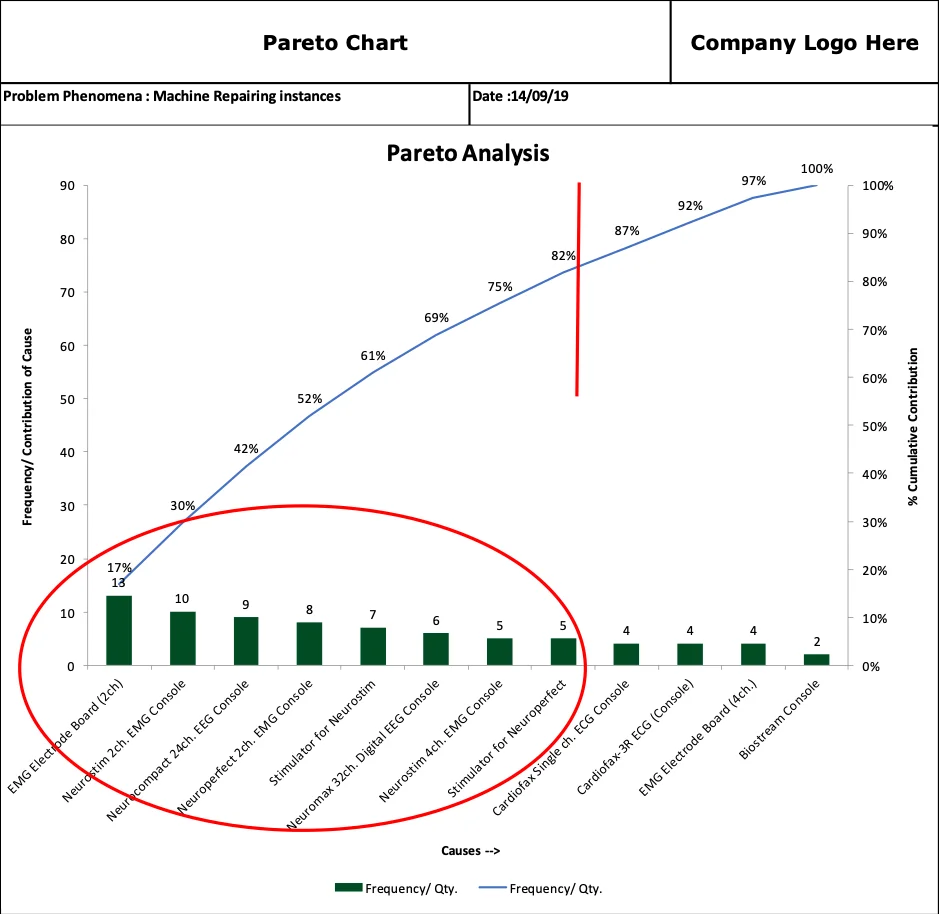
A Pareto chart provides a graphical representation of problems in descending order of frequency. It separates the “vital few” from the “trivial many” and highlights which issues require immediate attention.
- Bars represent frequency of occurrence.
- Categories are arranged from highest to lowest.
- A cumulative percentage line is plotted.
- Helps identify top contributors to problems.
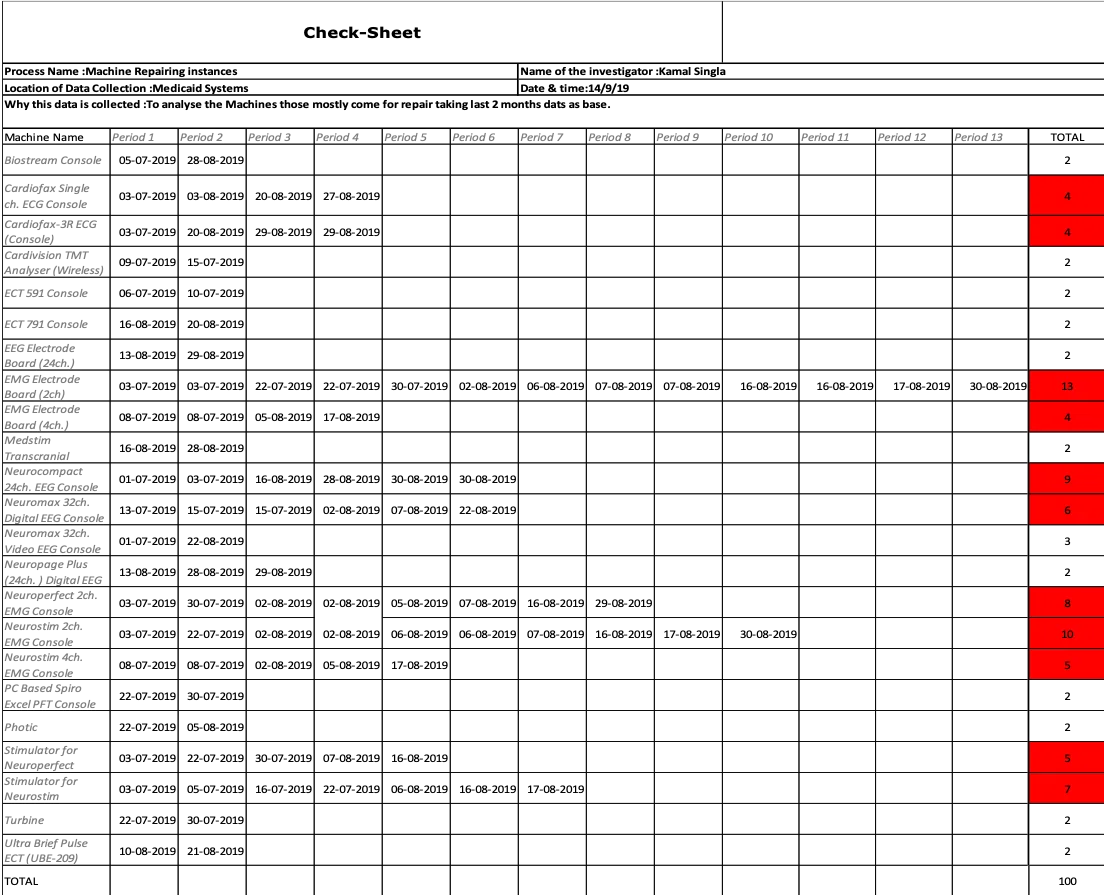
Example: Machine Repair Instances – Which is the Highest Repaired Machine?
Suppose an organization records machine repair frequency to identify which machines are responsible for the majority of downtime.
Steps Followed to Use Pareto
- Identify major causes leading to machine repairs.
- Observe and record frequency of each cause.
- Calculate cumulative frequency.
- Compute cumulative percentage.
Key Learning from Pareto Analysis
- Majority of results come from minority of causes.
- Focus on the critical 20% that drives impact.
- Allocate resources strategically.
- Improve operational efficiency through prioritization.
The Pareto Principle is a powerful decision-making tool in lean management and operational excellence. Instead of spreading effort evenly across all problems, successful organizations concentrate on the few factors that truly drive performance.